
Epipremnum
-
Epipremnum Aureum Cebu Blue, commonly known as Cebu Blue Pothos, is a stunning tropical vine characterized by its unique blue-green, heart-shaped leaves that display a beautiful silvery sheen. This cultivar is known for its fast growth and striking foliage, making it an excellent choice for indoor gardens and hanging displays. With the right care, the Cebu Blue Pothos can thrive and become a vibrant addition to your home.
1. Light:
Ideal: Cebu Blue Pothos thrives in bright, indirect light. This encourages optimal leaf coloration and growth.
Low Light Tolerance: While it can tolerate low light conditions, this may lead to slower growth and less vibrant foliage.
2. Watering:
Moderate Watering: Allow the top 1-2 inches of soil to dry out between waterings. This plant is tolerant of occasional drought, but overwatering should be avoided.
Overwatering Risk: Ensure the pot has good drainage to prevent the roots from sitting in water, which can lead to root rot.
3. Humidity:
Average Humidity: Cebu Blue Pothos prefers average household humidity (40-60%) but can benefit from higher humidity levels.
Boosting Humidity: In dry environments, misting the leaves or using a humidity tray can help maintain moisture in the air and promote healthy growth.
4. Temperature:
Preferred Range: 65-85°F (18-29°C). This plant enjoys warm temperatures and should be kept away from cold drafts and sudden temperature changes.
Cold Sensitivity: Avoid exposing the plant to temperatures below 50°F (10°C), as this can stunt growth and damage the leaves.
5. Soil:
Well-Draining Mix: Use a well-draining potting mix, such as a standard indoor plant mix with added perlite or orchid bark to improve aeration.
Airy Soil: The Cebu Blue Pothos thrives in a loose, airy mix that prevents excess moisture retention.
6. Fertilizer:
During Growth: Feed the plant every 4-6 weeks during the growing season (spring and summer) with a balanced, water-soluble fertilizer diluted to half strength.
Dormant Period: Reduce or stop fertilizing in the fall and winter when the plant’s growth slows.
7. Repotting:
Infrequent Repotting: Repot Cebu Blue Pothos every 1-2 years or when it outgrows its pot. This helps refresh the soil and provides space for growth.
8. Pruning:
Minimal Pruning: Prune to remove any dead or yellowing leaves and to control the plant’s shape. Regular pruning encourages bushier growth and helps maintain the desired size.
9. Propagation:
Easy Propagation: Cebu Blue Pothos is easy to propagate through stem cuttings. Take a cutting just below a node, place it in water or soil, and keep it in a warm, humid environment until roots develop.
10. Pests:
Common Pests: Be on the lookout for common pests like spider mites, mealybugs, and aphids. If infestations occur, treat the plant with insecticidal soap or neem oil, and regularly inspect for pests.
11. Blooming:
Rare Flowers: While not typically grown for its flowers, Cebu Blue Pothos can produce small, spathe-like flowers under ideal conditions, although this is rare in indoor settings.
Encouraging Blooms: Providing optimal care and conditions may encourage blooming, though it is more commonly appreciated for its foliage.
-
Epipremnum Aureum Global Green, commonly known as Global Green Pothos, is a captivating houseplant renowned for its lush, heart-shaped leaves that feature a beautiful blend of deep green and lighter green variegation. This hardy vine is easy to care for and can thrive in various indoor environments, making it a popular choice for both beginner and experienced plant enthusiasts. With proper care, the Global Green Pothos can enhance your home with its vibrant foliage.
1. Light:
Ideal: The Global Green Pothos thrives in bright, indirect light. This helps maintain the vibrant coloration of its leaves and promotes healthy growth.
Low Light Tolerance: While it can tolerate lower light conditions, prolonged exposure may lead to leggy growth and less vibrant foliage.
2. Watering:
Moderate Watering: Allow the top 1-2 inches of soil to dry out between waterings. This plant is resilient and can handle some drought but is susceptible to overwatering.
Overwatering Risk: Ensure the pot has adequate drainage to prevent water from accumulating around the roots, which can lead to root rot.
3. Humidity:
Average Humidity: Global Green Pothos does well in average household humidity (40-60%) but will appreciate higher humidity levels.
Boosting Humidity: In particularly dry environments, misting the leaves or using a humidity tray can help maintain moisture in the air.
4. Temperature:
Preferred Range: 65-85°F (18-29°C). This plant enjoys warm temperatures and should be kept away from cold drafts and sudden temperature changes.
Cold Sensitivity: Avoid exposing the plant to temperatures below 50°F (10°C), as this can negatively impact its growth.
5. Soil:
Well-Draining Mix: Use a well-draining potting mix, such as a standard indoor plant mix with added perlite or orchid bark to improve drainage and aeration.
Airy Soil: Global Green Pothos thrives in a light, loose soil mix that prevents excess moisture retention.
6. Fertilizer:
During Growth: Feed the plant every 4-6 weeks during the growing season (spring and summer) with a balanced, water-soluble fertilizer diluted to half strength.
Dormant Period: Reduce or stop fertilizing in the fall and winter when the plant’s growth slows.
7. Repotting:
Infrequent Repotting: Repot the Global Green Pothos every 1-2 years or when it outgrows its pot. This helps refresh the soil and provide more room for growth.
8. Pruning:
Minimal Pruning: Prune to remove any dead or yellowing leaves and to control the plant’s shape. Regular pruning encourages bushier growth and helps maintain the desired size.
9. Propagation:
Easy Propagation: Global Green Pothos can be easily propagated through stem cuttings. Take a cutting just below a node, place it in water or soil, and keep it in a warm, humid environment until roots develop.
10. Pests:
Common Pests: Be on the lookout for common pests like spider mites, mealybugs, and aphids. If infestations occur, treat the plant with insecticidal soap or neem oil, and regularly inspect for pests.
11. Blooming:
Rare Flowers: While Global Green Pothos is primarily grown for its attractive foliage, it can produce small, spathe-like flowers under ideal conditions, although this is rare in indoor settings.
Encouraging Blooms: Providing optimal care and conditions may encourage blooming, though it is more commonly appreciated for its leaves.
-
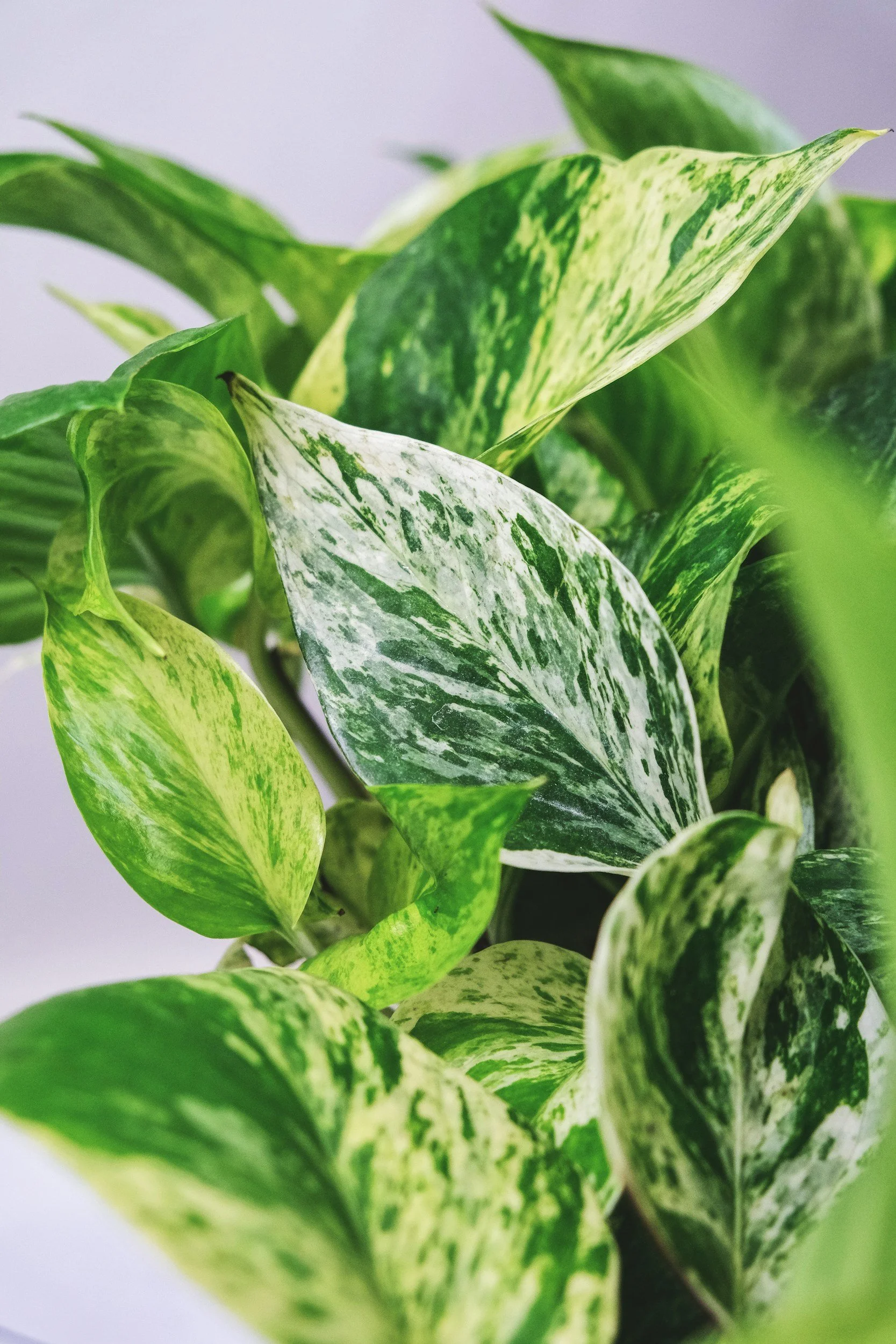
Epipremnum Aureum 'Pearls and Jade' is a striking variety of pothos known for its beautiful, marbled leaves featuring a unique blend of green, cream, and hints of silver. This low-maintenance plant is perfect for any indoor space, adding a touch of elegance with its trailing vines. Here’s how to keep your Epipremnum 'Pearls and Jade' thriving:
1. Light:
Ideal: Pearls and Jade thrives in bright, indirect light, which helps to enhance its beautiful variegation and promote healthy growth.
Low Light Tolerance: It can tolerate low light conditions, but this may result in slower growth and less pronounced variegation.
2. Watering:
Moderate Watering: Allow the top 1-2 inches of soil to dry out between waterings. As a resilient plant, it can tolerate brief periods of drought, but overwatering should be avoided.
Overwatering Risk: Ensure that the pot has proper drainage to prevent standing water, which can lead to root rot.
3. Humidity:
Average Humidity: Pearls and Jade does well in average household humidity (40-60%) but will thrive in higher humidity environments.
Boosting Humidity: In drier conditions, consider misting the leaves or using a humidity tray to maintain optimal moisture levels.
4. Temperature:
Preferred Range: 65-85°F (18-29°C). This plant prefers warm temperatures and should be kept away from cold drafts and sudden temperature changes.
Cold Sensitivity: Avoid exposing the plant to temperatures below 50°F (10°C), as this can negatively affect growth.
5. Soil:
Well-Draining Mix: Use a well-draining potting mix, such as a standard indoor plant mix with added perlite or orchid bark to improve aeration and drainage.
Airy Soil: Pearls and Jade thrives in a light, airy soil mix that prevents excess moisture retention.
6. Fertilizer:
During Growth: Feed the plant every 4-6 weeks during the growing season (spring and summer) with a balanced, water-soluble fertilizer diluted to half strength.
Dormant Period: Reduce or stop fertilizing in the fall and winter when the plant's growth slows down.
7. Repotting:
Infrequent Repotting: Repot every 1-2 years or when it outgrows its pot. This helps refresh the soil and provide space for growth.
8. Pruning:
Minimal Pruning: Prune to remove any dead or yellowing leaves and to shape the plant. Regular pruning encourages bushier growth and maintains the desired size.
9. Propagation:
Easy Propagation: Pearls and Jade is easy to propagate through stem cuttings. Take a cutting just below a node, place it in water or moist soil, and keep it in a warm, humid environment until roots develop.
10. Pests:
Common Pests: Watch for common pests like spider mites, mealybugs, and aphids. If infestations occur, treat the plant with insecticidal soap or neem oil and regularly check for pests.
11. Blooming:
Rare Flowers: While primarily grown for its attractive foliage, Pearls and Jade can produce small, spathe-like flowers under ideal conditions, though this is rare in indoor settings.
Encouraging Blooms: Optimal care and conditions may encourage blooming, but it is more commonly appreciated for its striking leaves.
-
Epipremnum Aureum Snow Queen, commonly known as Snow Queen Pothos, is a stunning houseplant cherished for its strikingly beautiful variegated leaves. This cultivar features heart-shaped leaves that are predominantly white and cream, interspersed with patches of deep green. Its unique coloration and easy-going nature make it a favorite among plant enthusiasts. With the right care, the Snow Queen Pothos can thrive and add a touch of elegance to your indoor space.
1. Light:
Ideal: Snow Queen Pothos thrives in bright, indirect light, which helps to enhance its beautiful variegation and promote healthy growth.
Low Light Tolerance: It can tolerate low light conditions, but this may result in slower growth and less pronounced variegation.
2. Watering:
Moderate Watering: Allow the top 1-2 inches of soil to dry out between waterings. As a resilient plant, it can tolerate brief periods of drought, but overwatering should be avoided.
Overwatering Risk: Ensure that the pot has proper drainage to prevent standing water, which can lead to root rot.
3. Humidity:
Average Humidity: Snow Queen Pothos does well in average household humidity (40-60%) but will thrive in higher humidity environments.
Boosting Humidity: In drier conditions, consider misting the leaves or using a humidity tray to maintain optimal moisture levels.
4. Temperature:
Preferred Range: 65-85°F (18-29°C). This plant prefers warm temperatures and should be kept away from cold drafts and sudden temperature changes.
Cold Sensitivity: Avoid exposing the plant to temperatures below 50°F (10°C), as this can negatively affect growth.
5. Soil:
Well-Draining Mix: Use a well-draining potting mix, such as a standard indoor plant mix with added perlite or orchid bark to improve aeration and drainage.
Airy Soil: Snow Queen Pothos thrives in a light, airy soil mix that prevents excess moisture retention.
6. Fertilizer:
During Growth: Feed the plant every 4-6 weeks during the growing season (spring and summer) with a balanced, water-soluble fertilizer diluted to half strength.
Dormant Period: Reduce or stop fertilizing in the fall and winter when the plant's growth slows down.
7. Repotting:
Infrequent Repotting: Repot Snow Queen Pothos every 1-2 years or when it outgrows its pot. This helps refresh the soil and provide space for growth.
8. Pruning:
Minimal Pruning: Prune to remove any dead or yellowing leaves and to shape the plant. Regular pruning encourages bushier growth and maintains the desired size.
9. Propagation:
Easy Propagation: Snow Queen Pothos is easy to propagate through stem cuttings. Take a cutting just below a node, place it in water or moist soil, and keep it in a warm, humid environment until roots develop.
10. Pests:
Common Pests: Watch for common pests like spider mites, mealybugs, and aphids. If infestations occur, treat the plant with insecticidal soap or neem oil and regularly check for pests.
11. Blooming:
Rare Flowers: While primarily grown for its attractive foliage, Snow Queen Pothos can produce small, spathe-like flowers under ideal conditions, though this is rare in indoor settings.
Encouraging Blooms: Optimal care and conditions may encourage blooming, but it is more commonly appreciated for its striking leaves.
-
Epipremnum Pinnatum 'Baltic Blue' is an eye-catching tropical plant known for its stunning, blue-green leaves with unique fenestrations as it matures. This versatile plant is perfect for both beginners and experienced plant enthusiasts, adding a touch of elegance to any indoor space. Here’s how to keep your Epipremnum Baltic Blue thriving.
1. Light:
Ideal: Pinnatum thrives in bright, indirect light, which enhances its leaf color and promotes healthy growth.
Low Light Tolerance: It can tolerate lower light conditions, but this may slow growth and lead to smaller, less vibrant leaves.
2. Watering:
Moderate Watering: Allow the top 1-2 inches of soil to dry out between waterings. As a resilient plant, it can withstand brief periods of drought, but avoid overwatering.
Overwatering Risk: Ensure that the pot has proper drainage to prevent excess moisture, which can lead to root rot.
3. Humidity:
Average Humidity: Pinnatum Pothos does well in average household humidity (40-60%) but thrives in higher humidity environments.
Boosting Humidity: In dry conditions, consider misting the leaves or using a humidity tray to maintain optimal moisture levels.
4. Temperature:
Preferred Range: 65-85°F (18-29°C). This plant enjoys warm temperatures and should be kept away from cold drafts and sudden temperature changes.
Cold Sensitivity: Avoid exposing the plant to temperatures below 50°F (10°C), as this can negatively affect growth.
5. Soil:
Well-Draining Mix: Use a well-draining potting mix, such as a standard indoor plant mix combined with perlite or orchid bark to improve aeration and drainage.
Airy Soil: Pinnatum prefers a light, loose soil mix that prevents excess moisture retention.
6. Fertilizer:
During Growth: Feed the plant every 4-6 weeks during the growing season (spring and summer) with a balanced, water-soluble fertilizer diluted to half strength.
Dormant Period: Reduce or stop fertilizing in the fall and winter when the plant's growth slows.
7. Repotting:
Infrequent Repotting: Repot Pinnatum every 1-2 years or when it outgrows its pot. This helps refresh the soil and provides additional space for growth.
8. Pruning:
Minimal Pruning: Prune to remove any dead or yellowing leaves and to shape the plant. Regular pruning encourages bushier growth and helps maintain the desired size.
9. Propagation:
Easy Propagation: Pinnatum can be propagated through stem cuttings. Take a cutting just below a node, place it in water or moist soil, and keep it in a warm, humid environment until roots develop.
10. Pests:
Common Pests: Watch for common pests like spider mites, mealybugs, and aphids. If infestations occur, treat the plant with insecticidal soap or neem oil and regularly check for pests.
11. Blooming:
Rare Flowers: While primarily grown for its attractive foliage, Pinnatum may produce small, spathe-like flowers under ideal conditions, although this is rare in indoor environments.
Encouraging Blooms: Providing optimal care and conditions may encourage blooming, but it is more commonly appreciated for its unique leaves.
-
Epipremnum Aureum 'Pinnatum Neon' or 'Pinnatum Green' is a captivating variety of pothos known for its vibrant, neon-green foliage and unique leaf shape. This climbing plant is a popular choice among houseplant enthusiasts for its stunning color and ease of care. With proper attention, the Pinnatum Neon can flourish, enhancing your indoor space with its lively presence.
1. Light:
Ideal: Pinnatum Neon thrives in bright, indirect light, which helps to maintain its vivid color and supports healthy growth.
Low Light Tolerance: While it can tolerate lower light conditions, this may result in slower growth and a reduction in leaf vibrancy.
2. Watering:
Moderate Watering: Allow the top 1-2 inches of soil to dry out between waterings. As a resilient plant, it can withstand brief droughts, but overwatering should be avoided.
Overwatering Risk: Ensure that the pot has proper drainage to prevent water from sitting at the bottom, which can lead to root rot.
3. Humidity:
Average Humidity: Pinnatum Neon does well in average household humidity (40-60%) but will thrive in higher humidity levels.
Boosting Humidity: In particularly dry environments, mist the leaves or use a humidity tray to maintain optimal moisture levels.
4. Temperature:
Preferred Range: 65-85°F (18-29°C). This plant enjoys warm temperatures and should be kept away from cold drafts and sudden temperature fluctuations.
Cold Sensitivity: Avoid exposing the plant to temperatures below 50°F (10°C), as this can negatively impact growth.
5. Soil:
Well-Draining Mix: Use a well-draining potting mix, such as a standard indoor plant mix with added perlite or orchid bark for improved aeration and drainage.
Airy Soil: Pinnatum Neon thrives in a light, loose soil mix that prevents excess moisture retention.
6. Fertilizer:
During Growth: Feed the plant every 4-6 weeks during the growing season (spring and summer) with a balanced, water-soluble fertilizer diluted to half strength.
Dormant Period: Reduce or stop fertilizing in the fall and winter when the plant's growth slows down.
7. Repotting:
Infrequent Repotting: Repot Pinnatum Neon every 1-2 years or when it outgrows its pot. This helps refresh the soil and provides more room for growth.
8. Pruning:
Minimal Pruning: Prune to remove any dead or yellowing leaves and to shape the plant. Regular pruning encourages bushier growth and maintains the desired size.
9. Propagation:
Easy Propagation: Pinnatum Neon can be propagated through stem cuttings. Take a cutting just below a node, place it in water or moist soil, and keep it in a warm, humid environment until roots develop.
10. Pests:
Common Pests: Be on the lookout for common pests like spider mites, mealybugs, and aphids. If infestations occur, treat the plant with insecticidal soap or neem oil and regularly inspect for pests.
11. Blooming:
Rare Flowers: While primarily grown for its striking foliage, Pinnatum Neon may produce small, spathe-like flowers under ideal conditions, although this is rare in indoor settings.
Encouraging Blooms: Providing optimal care and conditions may encourage blooming, but it is mainly appreciated for its vibrant leaves.